GlobalHealthyStarts
.webp)
The first 28 days of life – the neonatal period – are the most vulnerable time for a child’s survival. Yet in vulnerable areas of low- and middle-income countries (LMICs), access to medical technologies that could save these fragile lives is limited.
Medical equipment in LMICs tends to fail due to challenges including high cost, lack of infrastructure, unstable power supply, harsh climate and lack of trained personnel. Because rural hospitals are not equipped to deal with at-risk births, a high number of infants are transferred to higher-level hospitals, presenting a danger to the infants and burden to the healthcare system.
The GlobalHealthyStarts program aims to address this problem through a systemic approach to enable access to lifesaving oxygen and warmth. This comprises testing and delivering functional prototypes of oxygen concentrators and neonatal incubators that are affordable and adapted to the context. These life-saving medical devices are in development by EssentialTech through our GlobalO2 and GlobalNeoNat projects.
We will ensure capacity building as well as appropriate training for medical staff and technicians to maintain equipment. Ultimately, we also envision local production which will benefit the community and enhance acceptance.
Through this innovative approach, infants who are less ill can be appropriately treated where they are born, keeping them with their mothers and reducing risks associated with transfers. In addition, reference hospitals will be less burdened and able to focus on the most critical cases. The functioning of the whole system will be positively impacted.
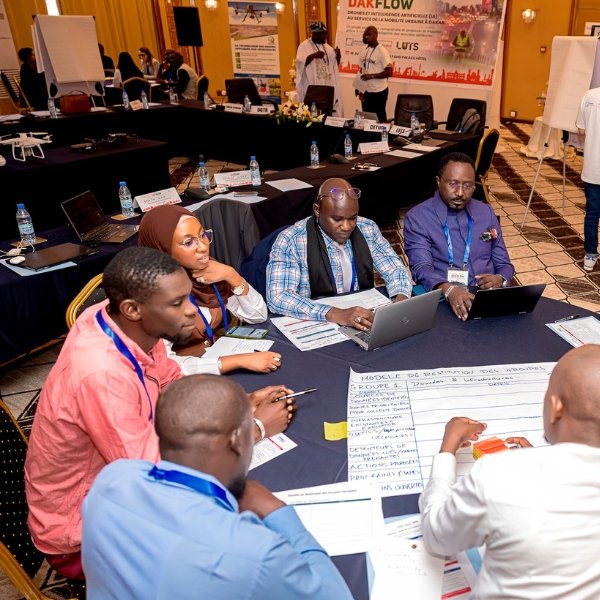
Main photo @Inthelight photography
.jpg)








Nathalie holds an M.A. in Social Sciences. She has a rich background in humanitarian work and social impact projects, working with NGOs and international organizations. She has led diverse teams across Sub-Saharan Africa, the Balkans, Central America, and Switzerland, fostering cross-disciplinary collaboration and building cross-cultural partnerships to develop impactful solutions that advance societal progress. Her core areas of expertise include post-crisis recovery, gender-based violence, and forced migration.In her previous roles, Nathalie worked with the International Organization for Migration (IOM) in Geneva on anti-human trafficking interventions and served as an independent consultant specialising in strategic planning for humanitarian initiatives. She also contributed to socio-economic integration programs for refugees in Switzerland. Nathalie joined EssentialTech in 2021 as Head of Stakeholder relations and Fundraising before taking the Head of the Sustainable Development Division in 2023, Nathalie leads interdisciplinary innovation projects that strategically leverage technology to develop sustainable solutions for vulnerable communities. Her work focuses notably on improving access to essential health services, including neonatal care, oxygen therapy,and assistive devices, while empowering healthcare professionals and institutions in low-resource settings.

Holding an MSc in Electrical Engineering from EPFL, Matthieu has led projects focused on developing appropriate technologies and sustainable business models for the Global South. He has a strong background in technical training, technology transfer, and fostering collaborations between academia and industry. Fluent in French, English, and German, Matthieu brings expertise in managing multidisciplinary teams and creating impactful solutions in medtech.

Dr. Yan-Kim Tran is a skilled power electronics engineer specializing in DC-DC power conversion for medium-voltage applications. With expertise spanning the entire lifecycle of power supply systems—from simulation and component design to hardware assembly and control firmware—he has contributed to a wide range of projects, from small-scale power solutions to multi-megawatt systems.
Yan-Kim earned both his Master’s degree in Electrical and Electronic Engineering (2013) and his PhD in Power Electronics (2019) from EPFL. His extensive professional experience has shaped his ability to develop innovative and resilient power supply technologies.
Since joining the EssentialTech Centre in 2022 as a development engineer for the GlobalO2 project, Yan-Kim has played a key role in designing life-saving medical technologies, including a robust oxygen production device and a neonatal incubator for resource-limited and challenging environments. His recent work has reinforced his expertise in innovation under technical and economic constraints, emphasizing deployment, maintenance, and user-centric design.
Curious, motivated, and highly adaptable, Yan-Kim is passionate about creating impactful solutions at the intersection of power electronics, embedded systems, and sustainable technology.

T4D Sustainable tarpaulins for emergency shelter

T4D Computational Design for Resilient Shelters