T4D Warnings that reach the last mile
Location : Madagascar
Problem
The communities of Maroantsetra are regularly exposed to various hazards, including floods, landslides, and cyclones. Early warnings are issued in the official Malagasy language, which many residents do not fully understand, limiting their effectiveness. Furthermore, the infrastructure presents several vulnerabilities: limited network coverage, recurring power outages, and the frequent destruction of pylons, reducing the reliability of modern means of communication such as SMS or radio.
Faced with these constraints, communities primarily rely on their own traditional warning systems—tam-tams, town criers, conch shells, or behavioral signals—which, however, are not integrated into institutional warning systems. This lack of consistency creates confusion among the population, weakens trust in official mechanisms, and increases the exposure of thousands of people during hazard events.
Challenge
Axis 3 of Madagascar's National Strategy for Risk and Disaster Management (SNGRC) stipulates that the capacities of stakeholders in disaster risk management and reduction (DRM/DRR) must be strengthened, while promoting both vertical and horizontal information exchange and strengthening the warning system.
Furthermore, the active participation of communities and the establishment of adequate warning systems are key factors for the successful implementation of the SNGRC. They are also aligned with the seventh objective of the Sendai Framework, which aims to significantly improve, by 2030, public access to multi-hazard early warning systems and disaster risk information and assessments.
Therefore, the main challenge of the project is to design a warning system that is accessible, understandable, and reliable for communities, even in the event of a failure of warning message dissemination infrastructure. This system will need to bridge the gap between traditional and modern systems, integrate multiple languages and cultural practices, and operate effectively in a context marked by poverty, isolation, and fragile infrastructure.
Solution
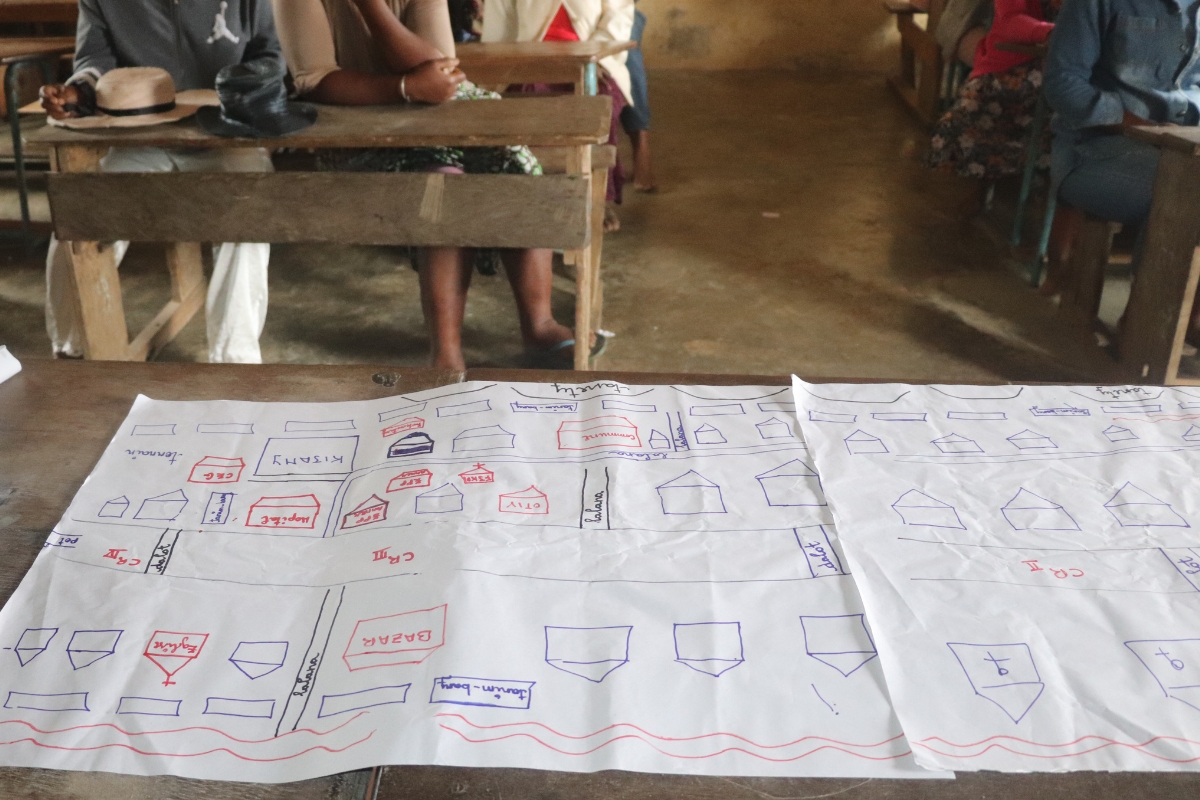
The project proposes a "sensitive risk warning system" designed jointly with communities. Rather than relying on a single system, the project will aim to combine traditional, rudimentary, and modern channels into a unified process. Drums, town criers, and conch shells will be combined with solar radios, hand-held sirens, and locally adapted visual tools, such as color-coded flags.
Local knowledge, including the interpretation of animal behavior or the observation of flood indicators, will be correlated with IOGA's scientific data, ensuring reliable and accurate warnings. Through a participatory approach, community members, including women's associations and youth groups, will co-create linguistically appropriate tools that are easy to maintain and integrated into daily practices.
Impact
By recognizing and integrating local expertise, the project strengthens community autonomy and restores trust in early warning systems. Families will receive alerts in their own language, through channels they already know and trust, making responses quicker and more coordinated. The system builds resilience by transferring traditional knowledge to younger generations while anchoring it in formal disaster management structures.
- Economically, accessible tools reduce reliance on external technologies and can be maintained locally.
- Environmentally, the use of natural indicators links disaster preparedness directly with biodiversity conservation.
- Globally, this process-based model offers a replicable approach for other disaster-prone regions where infrastructure is fragile but local knowledge is strong.
Team members
- Sitraka Rafetraharilanto, MEAL Manager, Medair Madagascar
- Ravo Ratovo, Project Coordinator, Medair Madagascar
- Tsaranirina Nomena Razafindralambo, Project Coordinator, Medair Madagascar
- Patricia Razafindrafara, Community Engagement Specialist, Medair Madagascar
- Olivia Raharinjato, Disaster Risk Management Manager, Medair Madagascar
- Patricia Gomez, Disaster Risk Management Advisor, Medair
- Julot H. Randriamanalina, Director of Strategic Planning, CPGU (Cellule de Prévention et d’Appui à la Gestion des Urgences)
- Ericot Prescillia Raoilijaona, Data Manager, CPGU
- Sitraka Nomena Rakotoarison, IT Network Administrator, CPGU
- Lucía Jalón Oyarzun, Head of Research, ALICE, EPFL
- Estefania Mompean Botias, Project Manager, ALICE, EPFL



T4D Sustainable tarpaulins for emergency shelter

T4D Computational Design for Resilient Shelters